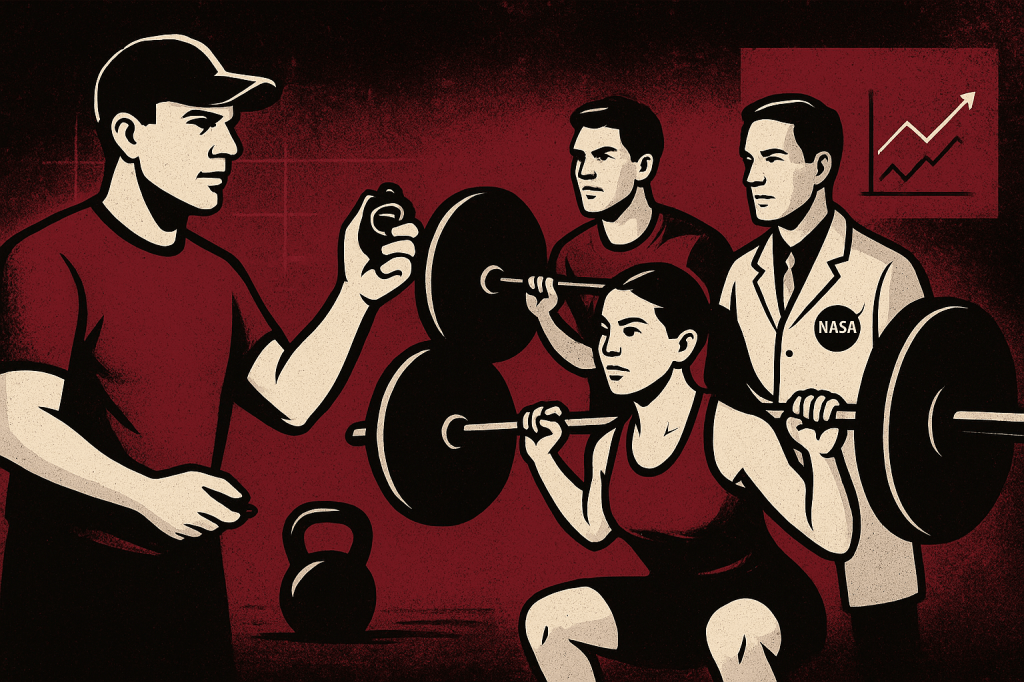
People often think of a strength and conditioning coach as someone in a loud weight room. They imagine a coach with a stopwatch in hand, motivating athletes through their final reps. But the role goes far beyond that image. Strength and conditioning (S&C) coaches are educators, strategists, and performance architects. They work to make people stronger, faster, and more resilient. This includes college athletes, high-performance professionals, or clients in a private training facility.
What Does a Strength and Conditioning Coach Actually Do?
At its heart, an S&C coach designs and implements programs that improve performance and reduce injury risk. It’s not just about lifting heavy weights—it’s about understanding physiology, biomechanics, recovery, and psychology. These coaches employ science to enhance human performance. They blend data with coaching instincts to maximize every individual’s potential.
No matter where you work, one thing is consistent: you must hold a CSCS (Certified Strength and Conditioning Specialist) certification. It’s the gold standard credential for this profession, required by nearly all collegiate and tactical programs. The CSCS ensures you understand the science behind what you’re teaching—because in this field, guessing isn’t an option.
Coaching at the College Level
I know firsthand what this world looks like. My first coaching job was at an NCAA Division III college. I was both a Track and Field Coach and the de facto strength coach for my athletes. I worked specifically with the throwers—shot put, discus, javelin, and hammer. The college didn’t have a dedicated S&C coach. I was responsible for all of the programming.
Later, I moved to an NCAA Division II college. This program had a strength and conditioning coach, but he primarily programmed for baseball and basketball. That left the rest of us coaches fending for ourselves. Once again, I found myself designing and implementing strength programs for my throwers. Balancing athletic development with limited resources taught me creativity. It also taught me adaptability. Furthermore, it reinforced the importance of a solid foundation in programming principles.
Both experiences forced me to truly understand the “why” behind training principles. Every week mattered. I had to design programs that balanced strength, power, and recovery while keeping athletes healthy and progressing throughout the season. I quickly realized that knowledge is crucial. It can mean the difference between an athlete improving 5% or 25% over the course of a season.
I leaned heavily on what I learned from the CSCS materials. I studied how to build periodization models. I used both linear and undulating training progressions. It was one of the best professional learning experiences of my career. I learned how much science, planning, and precision go into coaching at the collegiate level.
Strength and Conditioning Beyond College Athletics
After my college coaching experiences, I expanded my work to NASA Langley Research Center. This wasn’t a military base. However, the environment often intersected with high-performance personnel. These included Air Force cadets who would occasionally seek guidance, as well as CIA agents. Most commonly, I worked with NASA engineers and rocket scientists.
Many of the individuals I worked with were highly intelligent. However, they faced physical challenges. These included poor posture, weak cores, or limited strength from long hours at desks or in labs. My focus was on functional strength, injury prevention, and proper technique, especially for foundational lifts like squats and deadlifts. I leaned heavily on what I learned from the CSCS curriculum. I applied biomechanics and programming principles. This ensured my clients built resilient, healthy bodies without risking injury.
This experience taught me that strength and conditioning isn’t just for athletes—it’s for anyone whose performance, posture, or longevity matters. Whether you’re launching rockets or throwing a discus, the science of human performance is universal.
In the Private Sector and Entrepreneurship
Not all S&C coaches work within institutions. Many open their own sports performance facilities or consulting businesses, training everyone from youth athletes to competitive adults. Running your own business allows you to shape your philosophy. It lets you choose your clientele. You can create a community centered around performance and growth.
Of course, that freedom comes with responsibility—you’re the coach, marketer, and manager all in one. For individuals with a strong foundation, possessing the all-important CSCS certification, it can be incredibly rewarding. They have the opportunity to build something from the ground up.
Why It Matters
The location varies from a college weight room to a NASA training lab, or even a private facility. Strength and conditioning coaches share a common goal: to make people better. The work isn’t just about sets and reps—it’s about helping others discover their potential through structure, science, and consistency.
These coaches play a crucial role in athlete development, tactical readiness, and long-term health. They understand how to push performance without compromising safety, and that balance is what makes their work so valuable.
How to Get Started
If you’re interested in becoming a strength and conditioning coach, begin by earning a bachelor’s degree in Exercise Science. You could also pursue a degree in Kinesiology or a related field. Next, work toward your CSCS certification through the National Strength and Conditioning Association (NSCA).
Internships and graduate assistantships are essential—they provide real-world experience and connections in the field. If you are looking into high-performance or tactical roles, consider exploring opportunities with NASA. You can also look into careers with the military or consulting companies that specialize in elite performance.
If your goal is entrepreneurship, combine your performance expertise with business education. It is crucial to understand marketing, finance, and client relationships for long-term success.
Final Thoughts
The role of a Strength and Conditioning Coach is as challenging as it is rewarding. You’re not just teaching people how to lift—you’re helping them unlock potential they didn’t know they had. Whether you’re coaching a college team, training rocket scientists, or running your own facility, the mission remains the same. The mission is to build strength, confidence, and resilience through intelligent, evidence-based training.
For me, it all started with a group of throwers on a college track team. That experience, at both Division III and Division II programs, taught me a lot. It combined with the work I did at NASA. Together, they taught me more about programming, leadership, and human potential than any textbook ever could.
 Exercise Science Journey