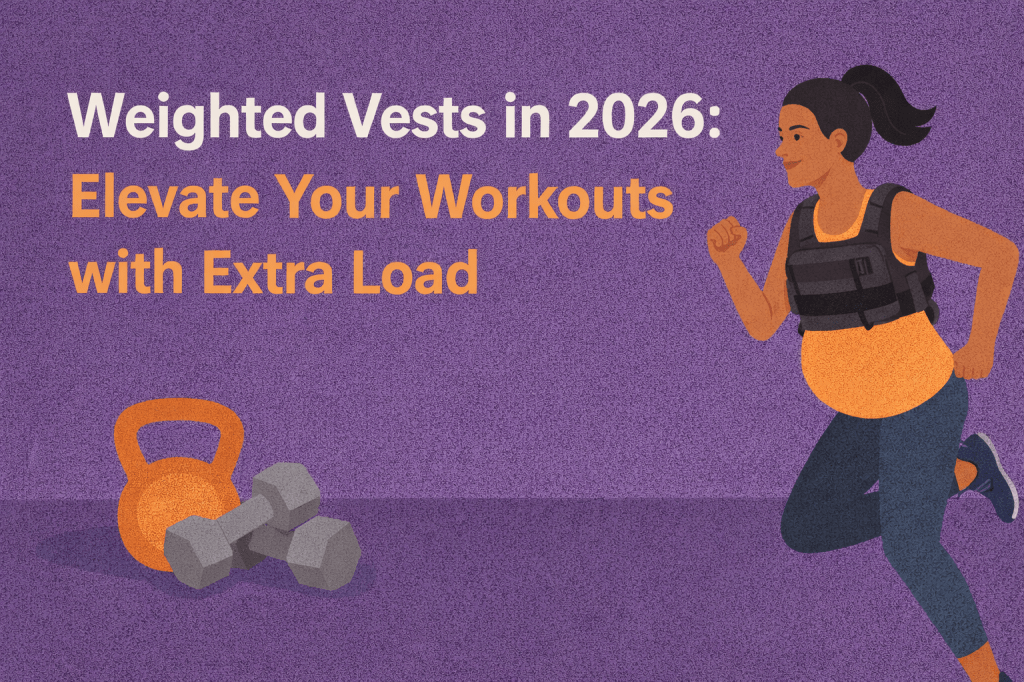
Weighted vests have re-emerged as a popular fitness tool in 2026. They offer a simple way to increase training intensity. This is achieved without the need for bulky equipment. Whether you’re walking or performing bodyweight strength exercises, a weighted vest provides an effective stimulus. It also enhances strength when you seek to challenge yourself during conditioning workouts. Additionally, it supports bone health and elevates cardiovascular demand when used appropriately.
I’ll also be honest and say that I actually love weighted vests. Right now, I’m seven months pregnant. I feel like I’m constantly walking around with a weighted vest attached to me anyway. I’ve used weighted vests on and off for probably the last 10 years. I was first introduced to them through CrossFit. I’ve competed in CrossFit for over a decade. They’re a great tool. This is especially true if you don’t have room for dumbbells or kettlebells. They are also beneficial if you genuinely enjoy bodyweight and calisthenics-style training and want to make it more challenging.
My vest is currently in storage. I’m hoping it will make a comeback once baby #2 arrives. I need to be fully recovered—both physically and mentally—and ready for that kind of training again.
What a Weighted Vest Is and Why It Matters
A weighted vest is exactly what it sounds like. It is a vest designed to hold added weight, usually through evenly distributed pockets or plates. Many models are adjustable, allowing users to increase or decrease load as fitness levels change.
The main benefit of a weighted vest is that it adds resistance to movements you already do. Walking becomes more demanding. Bodyweight exercises require more strength. Even posture muscles work harder simply by supporting the extra load. Over time, this can contribute to increased calorie expenditure. It also improves muscular endurance. The positive stress on bones supports bone density.
Weighted vests are commonly used during walking, stair climbing, bodyweight circuits, calisthenics, and conditioning workouts. Some athletes also use them for skill work. They work on improving pull-ups. Athletes also prepare for sport-specific demands involving carrying or load-bearing movements.
Why Weighted Vests Became a 2026 Fitness Trend
One of the biggest reasons weighted vests are trending again is accessibility. You don’t need a gym, a barbell, or a large home setup. One piece of equipment can instantly increase the difficulty of many workouts. This makes it appealing for people training at home, outdoors, or in smaller fitness spaces.
They also make progressive overload easier to manage. Instead of changing your entire workout plan, you can slightly increase the load you’re carrying while keeping the same movements. This helps maintain consistency while still creating a new training stimulus.
Another factor is time efficiency. Adding weight increases energy expenditure without extending workout length, which is appealing for busy schedules. There’s strong functional carryover. Daily life often involves carrying groceries, climbing stairs, or standing for long periods with load on the body.
How to Structure a Safe and Effective Routine
When starting with a weighted vest, the goal is to add just enough load to challenge the body. It is important to maintain excellent movement quality. The vest should feel noticeable but not disruptive to posture, breathing, or balance.
Start by warming up without the vest. Then wear it briefly during light movement. This allows your body to adjust to the added weight. From there, the vest can be incorporated into strength or conditioning segments of your workout.
Progression should be gradual. Increasing the amount of time spent wearing the vest is often safer than immediately increasing the weight. Once your body tolerates longer sessions well, small weight increases can be introduced.
Above all, form matters more than intensity. If posture starts to collapse, it’s a sign the load is too high. If movements feel unstable, fatigue may have set in.
Best Uses Based on Training Goals
For general fitness and endurance, weighted vests work well during brisk walking, stair climbing, and bodyweight circuits. Squats, push-ups, resistance band rows, and step-ups can all be made more challenging with added load. Interval-style workouts, alternating short bursts of effort with rest, are especially effective.
For strength and muscle development, weighted vests are useful for exercises like push-ups, lunges, pull-ups, dips, and single-leg squat progressions. The vest adds resistance without changing the movement pattern, which can be helpful for building strength in familiar exercises.
For power and athletic development, use light to moderate vest loads for jumping and bounding drills. Keep the volume low. Ensure landing mechanics are solid before adding weight.
For balance, mobility, and functional training, wear a light vest during gait drills. Also, in controlled balance exercises, it can increase core engagement. It also raises postural demand. When used carefully, this may improve overall stability.
In rehabilitation or special populations, very light loads may be used under professional supervision. The focus is on controlled, low-impact movements. Additionally, gradual exposure is emphasized.
Safety Considerations and Common Mistakes
The most common mistake with weighted vests is progressing too quickly. Adding too much weight too soon can place unnecessary stress on the lower back, knees, and shoulders.
Fit is also important. A vest should sit snugly and distribute weight evenly without shifting during movement. Poor fit can change movement mechanics and increase injury risk.
Posture should always be monitored. Neutral spine, controlled breathing, and stable foot contact are key. Anyone with joint issues, back problems, or prior injuries should consult a medical or fitness professional before adding external load.
Supportive footwear and stable surfaces also become more important when training under load, especially during dynamic movements.
A Simple Starter Routine
A beginner-friendly approach is to add the vest to short circuits or walking sessions a few times per week.
After a normal warm-up, a simple circuit might include push-ups, squats, rows or band pulls, and walking lunges. These exercises are performed for moderate repetitions with rest between rounds. Another option is step-ups, dips, planks, and short loaded carries.
Sessions don’t need to be long to be effective. Even short bouts of loaded movement can provide meaningful stimulus when performed consistently and with good form.
How to Integrate a Weighted Vest into Your Overall Training
Weighted vest training works best as a supplement, not a replacement, for traditional resistance and cardiovascular training. Many people use it on certain days to increase intensity while keeping other workouts lighter to support recovery.
Tracking progress can be helpful. Noting vest weight, exercise selection, and how challenging sessions feel can guide future adjustments and prevent overuse.
Rotating between heavier and lighter vest days also helps manage fatigue while still benefiting from added load.
Pros and Cons at a Glance
Weighted vests offer a convenient, portable way to increase workout difficulty and improve bone, muscle, and cardiovascular demands. They are versatile and can be used across many training styles.
They are not a complete replacement for traditional resistance training. They can contribute to poor mechanics if overloaded or poorly fitted. Like any tool, their effectiveness depends on thoughtful use.
 Exercise Science Journey
Leave a comment