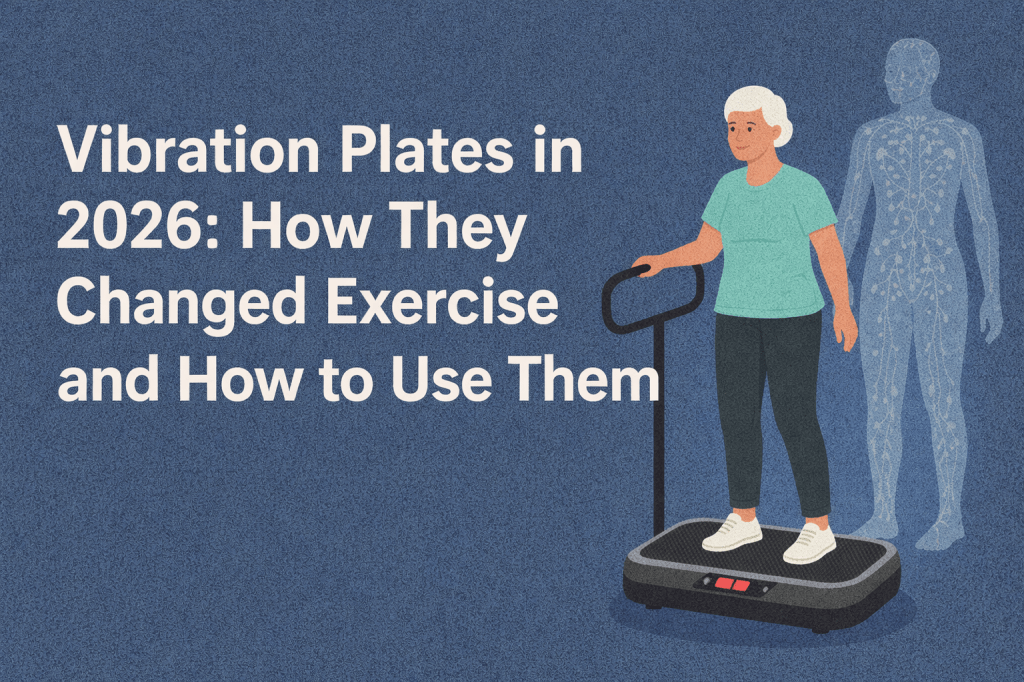
Vibration plates have re-emerged as a noticeable fitness trend in 2026. They blend science, accessibility, and rehabilitation-focused applications into one compact piece of equipment. Vibration platforms were once considered a niche or even gimmicky tool. Now, they are being discussed more seriously in clinical and performance settings.
Before diving in, I want to be transparent. I do not personally have extensive hands-on experience training clients on vibration plates. I have rarely—if ever—seen them used regularly in commercial fitness centers. I’m an early-90s baby. In many ways, these devices feel like they were popular before my time in the industry.
Over the past year, I’ve had at least a dozen clients and fitness members ask me about vibration plates. This really pushed me to learn more. Honestly, at first I knew absolutely nothing about them. That’s why I decided to dig into the research and current best practices. I wanted to better guide the people I work with. I also aimed to help them determine whether this type of training is appropriate for their goals and needs.
After doing that research, I do believe vibration plates can have a place in the fitness and wellness realm. They are particularly beneficial for specific populations. However, they are not something I personally use often in training.
What a Vibration Plate Is and How It Works
A vibration plate is a platform that produces rapid mechanical vibrations, either vertically or in oscillating side-to-side patterns. When a person stands, sits, or places their hands on the plate, those vibrations stimulate involuntary muscle contractions. This happens through the nervous system.
This neuromuscular response can increase muscle activation during basic movements like squats, lunges, and planks, even without external resistance. Because of this, vibration plates are often discussed in relation to improving circulation, balance, and joint stability. They also enhance general muscle engagement, especially when low-impact options are needed.
Modern platforms now include adjustable vibration frequencies, amplitudes, and preset programs, allowing for more individualized use than earlier models.
Why Vibration Plates Are Being Revisited in 2026
Several factors have contributed to renewed interest in vibration training. One major reason is the increased focus on joint-friendly and accessible exercise methods. This is particularly true for aging populations or individuals dealing with movement limitations.
Research has continued to explore the role of vibration. It improves balance, flexibility, and muscle activation. In some cases, it can also enhance bone density when combined with traditional exercise. While it is not a replacement for strength training, it may be a valuable supplement. This is particularly true when heavy loading is not suitable.
Another area of interest is circulation and fluid movement. Some clinicians and researchers are exploring vibration’s potential role in supporting fluid drainage. This approach may aid those with mild lymphatic issues, such as minor lymphedema. However, it should always be approached cautiously and under medical guidance.
Additionally, today’s platforms are more technologically advanced and easier to integrate into short training sessions, rehab programs, and mobility routines.
Who May Benefit Most from Vibration Plate Training
Athletes may use vibration plates as a supplemental stimulus. However, I believe their strongest potential benefit may be for individuals who struggle with traditional exercise formats.
This includes people with balance challenges, older adults working on fall prevention, and individuals who need low-impact movement options. In these cases, vibration plates may help stimulate muscle activation. They also activate postural muscles in ways that feel manageable. This is often less intimidating than traditional gym equipment.
There is also emerging interest in their role for people dealing with circulation or mild fluid retention issues. However, this should never replace medical treatment. It should only be considered with professional oversight.
How to Structure a Safe and Effective Routine
Like any training method, vibration plates should be introduced gradually. Starting with very low vibration settings allows the nervous system to adapt to the stimulus without overwhelming the body.
Beginners may benefit from short sessions, one to two times per week, lasting about 10 to 15 minutes. It is better to increase time before increasing vibration intensity. Exercises should remain simple and controlled, focusing on posture and stability.
Foundational movements such as squats, hip hinges, calf raises, and supported planks can be combined with vibration when appropriate. Balance drills using light support may also be helpful for those working on stability.
Safety Considerations and When to Be Cautious
Vibration training is not appropriate for everyone. Individuals who are pregnant should not use vibration plates without medical clearance. People with acute injuries or significant joint instability should also get medical clearance. Similarly, those with implanted medical devices or neurological conditions must seek clearance from a medical professional.
Dizziness, numbness, or excessive fatigue are signs that intensity or duration may be too high. Proper footwear or stable barefoot positioning is important, and machines should have non-slip surfaces and support rails when possible.
Hydration, breathing, and recovery still matter, just as they do with any other form of exercise.
Integrating Vibration Plates into a Full Fitness Plan
Vibration plates are best viewed as a supplement rather than a primary training method. They can be incorporated into warm-ups, balance sessions, recovery days, or rehabilitation programs. Traditional strength training, cardiovascular exercise, and mobility work remain the foundation of most fitness plans.
For individuals who struggle to tolerate traditional workouts, vibration training may serve as a stepping stone. It can encourage more active movement. This in itself can be incredibly valuable.
Pros and Cons to Consider
Potential benefits include increased muscle activation with relatively low joint stress. Improved balance and stability is another benefit. Sessions are short and efficient, which may feel more approachable for beginners or clinical populations.
Vibration plates have limitations. They do not provide enough resistance to replace strength training. Benefits are reduced when they are used without structured programming. Some users may also find the sensation uncomfortable or fatiguing.
Final Thoughts
I do not have extensive personal experience using vibration plates in fitness centers. However, I believe they deserve thoughtful consideration. This is especially true for populations dealing with balance deficits, mobility limitations, or circulation-related challenges. This post originated from my desire to better serve my own clients. I want to understand what these machines actually do. I also want to know who they may help.
They are not a magic solution. When used appropriately and under professional guidance when needed, vibration plates may offer another tool. They can help people move more safely and confidently.
As with any fitness trend, the goal should not be to chase equipment. Instead, aim to find methods that support consistency and safety. Focus on achieving long-term movement health.
 Exercise Science Journey
Leave a comment