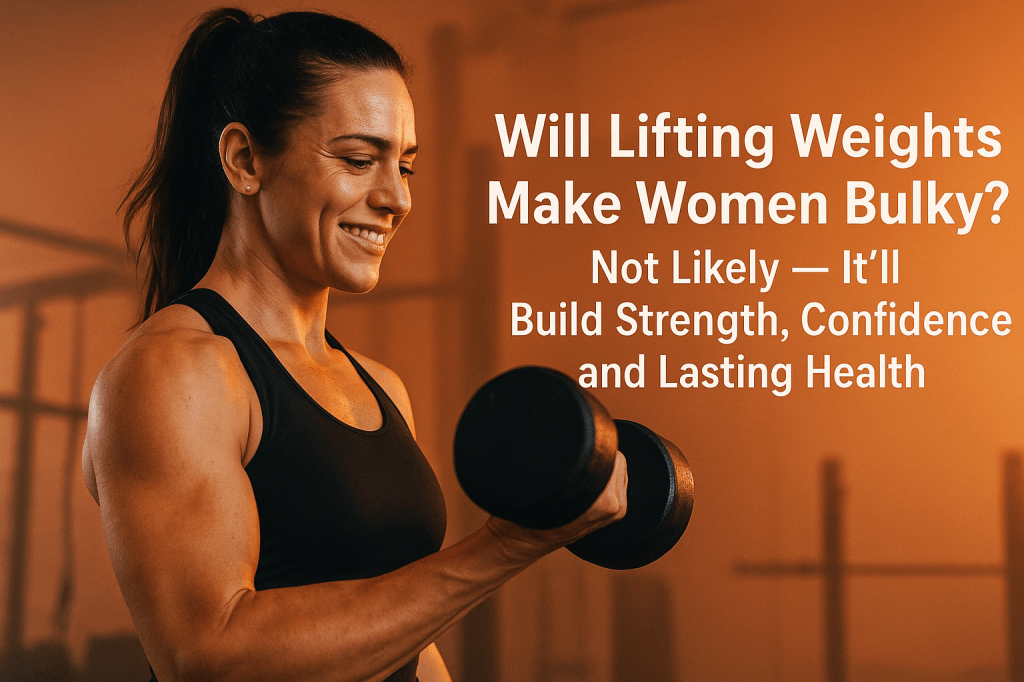
This question comes up all the time: “If I start lifting weights, will I get bulky?”
The short answer — probably not. For most women, lifting weights won’t make you look like a professional bodybuilder. It will make you stronger. It will improve bone density. It will boost your metabolism. It will help you feel more confident in your own skin.
I say that from experience. I love lifting weights — it’s a huge part of who I am. And yes, if you look at me, you can tell I’ve picked up a barbell or two. I’m naturally built to be strong. A lot of that comes from genetics. The women on my mom’s side all have muscle tone and broad shoulders. This includes even the ones who’ve never stepped foot in a gym. I have more than a decade of strength athletics experience. I threw shot put, discus, hammer, and javelin through college and beyond. As a result, my body is naturally “programmed” to carry muscle.
But here’s the thing: I didn’t just wake up one day “bulky.” To look like the female version of the Incredible Hulk, I would have to start taking performance-enhancing drugs. I am 110% against these drugs. Those substances might change your appearance, but they come with serious health risks and absolutely no long-term benefits.
The reality is, lifting weights a few times a week won’t make you huge. It takes years of dedicated training to create that extreme level of muscle mass. You need high-calorie intake and specialized programming. In some cases, unnatural enhancement is involved. So if your goal is to look toned, strong, and healthy — not oversized — you can relax. The iron isn’t out to make you bulky.
💭 Why the “Bulky” Myth Exists
A lot of the fear around women lifting weights comes down to misunderstanding how our bodies work. Men and women have very different hormone profiles. Testosterone is the main driver of muscle size, and men naturally have much higher levels than women. Without those hormonal conditions, most women simply won’t develop that level of mass. Without a specific goal to train for extreme muscle growth, this is even less likely.
It’s also worth noting that early in strength training, you may feel like your body is “filling out.” That’s not necessarily fat or bulk. It’s muscle developing under existing body fat. As your composition shifts, you’ll notice more tone and definition.
💪 What Really Happens When You Lift
When women lift weights consistently, a few amazing things happen:
Stronger bones: Resistance training strengthens bones by signaling bone-forming cells. It builds more density, especially in areas like the hips, spine, and wrists. This helps protect against osteoporosis and improves posture.
Faster metabolism: Muscle tissue burns more energy at rest. This means that the more lean mass you have, the more calories you burn daily. This happens even when you’re not working out.
Better body composition: Strength training helps you lose fat while maintaining or building lean muscle. This gives you a more sculpted, athletic look — not bulk, but balance.
Improved function: Carrying groceries, climbing stairs, or picking up your kids all get easier when you’re strong.
🧠 Myths That Need to Go
“Lifting heavy makes women look like men.”
Not true. Your genetics and hormones prevent that kind of rapid, dramatic growth.
“I’ll get bulky if I lift a few times a week.”
Nope. Building muscle takes consistent overload, proper nutrition, and time — it doesn’t happen by accident.
“Cardio is the only way to stay lean.”
Actually, combining resistance training and cardio creates the best long-term results for fat loss, bone health, and energy balance.
🏋️ Practical Strength Training Guidelines
- Frequency: 2–3 full-body sessions per week
- Exercises:
- Squats or goblet squats
- Deadlifts or hip hinge movements
- Push-ups or bench presses
- Rows (machine, dumbbell, or barbell)
- Overhead presses
- Volume: 2–3 sets of 8–12 reps per exercise
- Progression: Gradually increase weights, reps, or sets every 1–2 weeks
- Form first: Master technique before adding load
- Recovery: Allow 48 hours between sessions for the same muscle group
🥗 Fueling and Recovery
Your nutrition supports your training. Aim for a balance of lean proteins, complex carbs, and healthy fats to fuel performance and repair muscle. Stay hydrated, and make sure you’re getting enough calcium and vitamin D for bone health. Strength training is powerful. It’s even more effective when your body has the nutrients it needs to rebuild stronger.
💖 Beyond the Physical
The best part about lifting weights? The confidence and independence it brings.
You start to realize you’re capable of more than you thought — not just physically, but mentally. Lifting teaches discipline, self-awareness, and resilience.
For me, it’s not about being “bulky” — it’s about being strong, capable, and healthy. That’s a look and a lifestyle I’ll always be proud of.
 Exercise Science Journey
Leave a comment